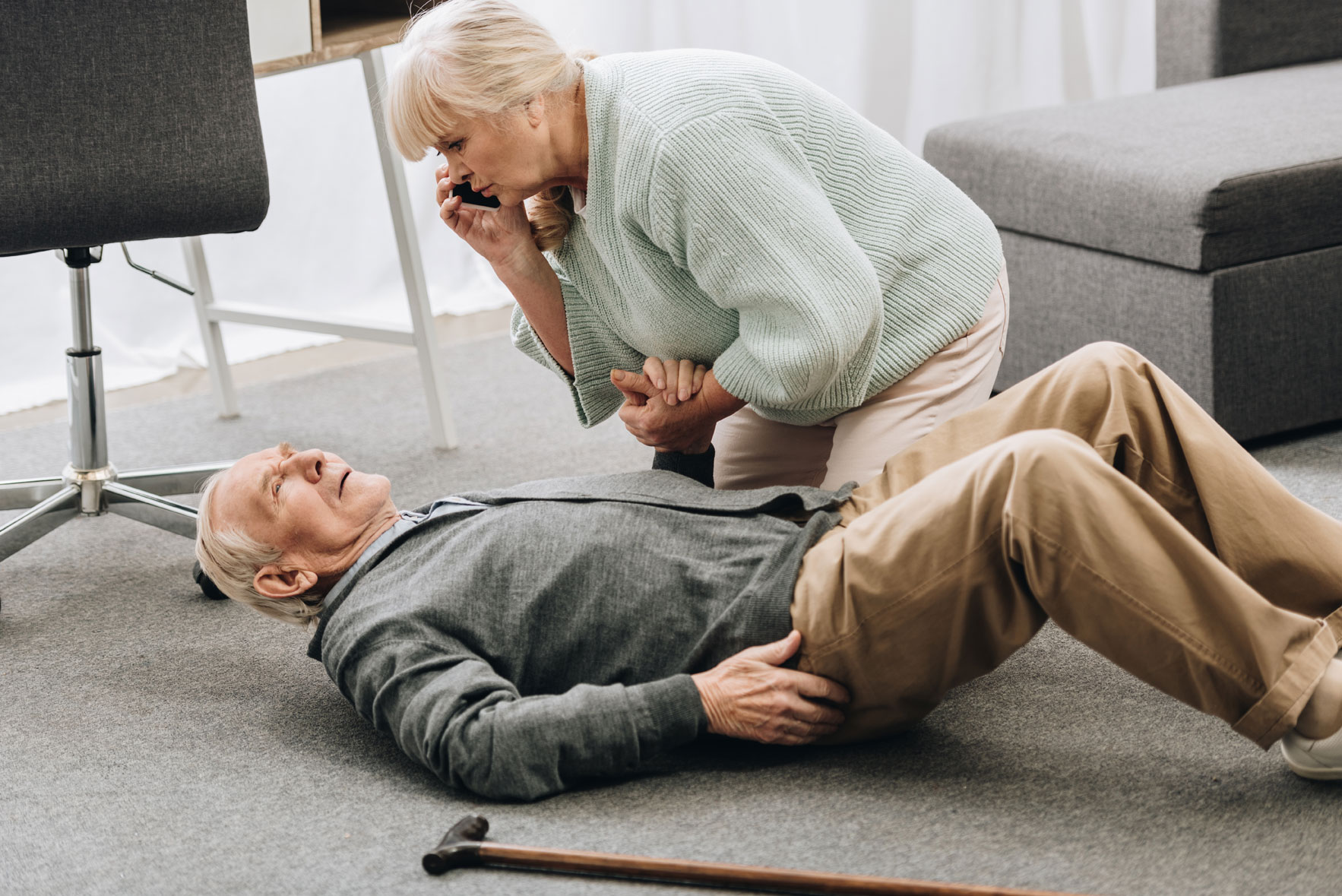
If you or a loved one has fallen and is currently on the floor and injured, then call for help! If needed you should dial 999 for an Ambulance.

What to do if you fall and cannot get back up:

  • Call for help using a pendent alarm or telephone
  • Try to keep changing position and moving your joints to try to prevent stiffness and pressure areas and help circulation. If you think you have broken part of your body then try not to move that.
  • Try to get comfortable and keep warm – can you reach to pull a blanket over you, or reach a cushion for your head?

This video demonstrates how to get up if you have fallen and are not injured.

Why do people with Parkinson’s fall? There are a number of different reasons why people with Parkinson’s may be more likely to fall over. These include:
  • Poor balance – Parkinson’s affects some of the nerves which help you to correct balance and steady yourself.
  • Involuntary movements – which can knock people off balance
  • Freezing of movement – When people are “frozen”, they can find it difficult to move and overbalance. See Freezing section for more information.
  • Posture – People with more advanced Parkinson’s can find that they stoop forward when walking, making it harder to balance.
  • Muscle weakness – Many people become less active due to Parkinson’s resulting in general weakness and increasing the risk of falls.
  • Low blood pressure – Falling blood pressure, especially on standing or walking, can cause light-headedness and make people fall. Watch this video for more information.
  • Shuffling – People with Parkinson’s often complain that their feet shuffle when they walk, and they find they trip over things.
How to reduce the risk of falling
  • Exercise! Building stronger muscles and practicing balance exercises keeps you upright when you start to lose balance. Even if you have not fallen it is important to maintain your strength and balance to reduce your falls risk.
  • Focus on taking big steps and swinging your arms as you move. Try not to rush or multitask.
  • De-clutter at home and re-arrange things to make it easy to get around.
  • Make sure you have good lighting at home.
  • Make sure you wear well-fitting, supportive shoes which grip the floor and are not going to slip off.
Who can help?
  • Occupational Therapists can advise on hazards around the home and how to best get around. They can sometimes recommend rails or handles to help people balance. Click here for more information.
  • Physiotherapists can advise on strength, balance and appropriate equipment that can help if required. You can practice some strength and balance exercises here.
  • Social services  locally have different community alarm systems. This usually involves someone wearing a small device which has a button they can press to call for help if they have fallen.
  • Local falls services – if you are felt to be at a high risk of falls you may be referred to a specialist falls clinic for assessment.
Other resources Cardiff and Vale University Health Board has produced a collection of online resources about how to prevent falls, which can be accessed here: Trak – Falls Service (trakphysio.org.uk) If you are having problems with falling, please talk to your GP or your Parkinson’s team. trip, unsteady, overbalance, tumble, drop, collapse