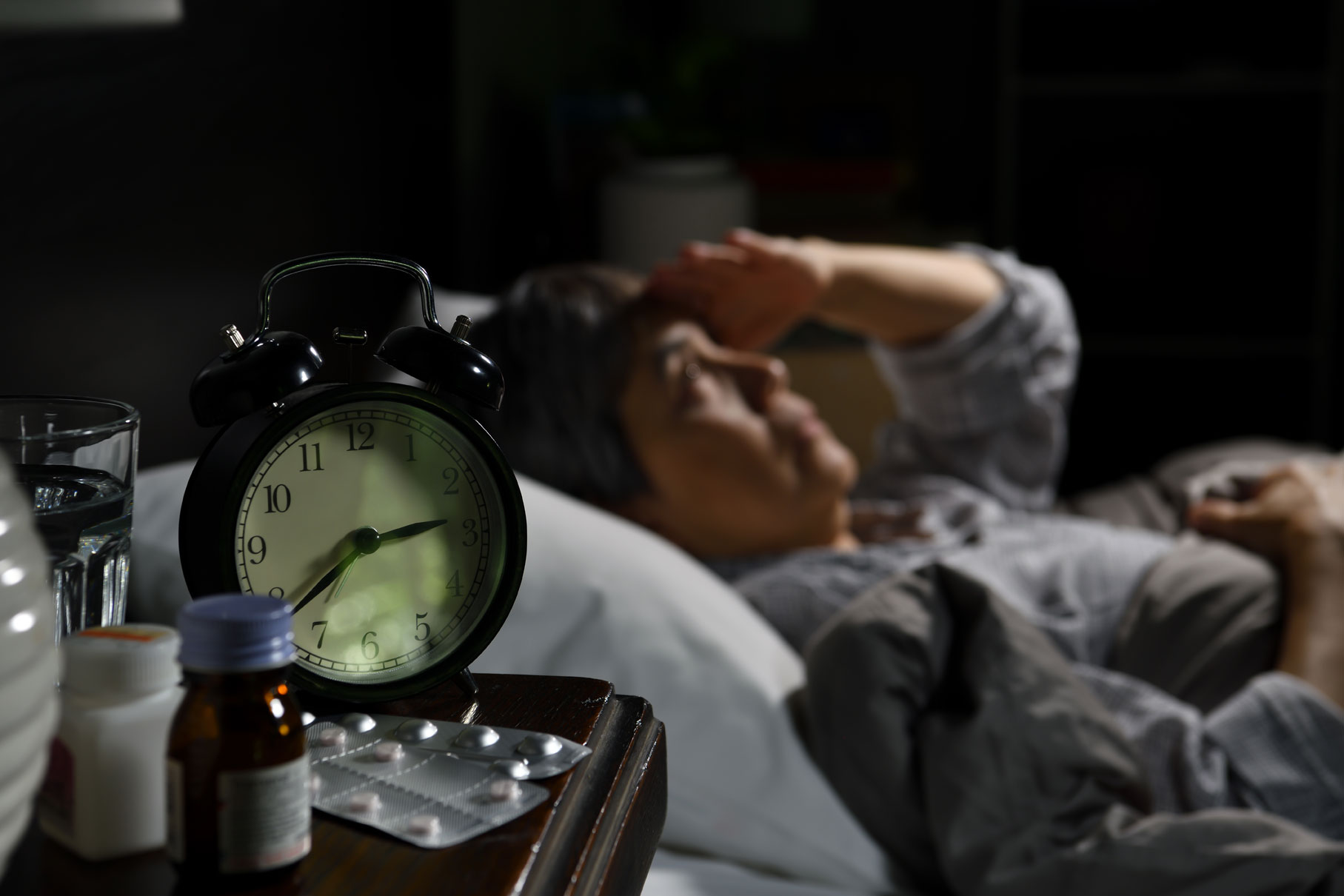
 Parkinson’s is associated with a number of different sleep problems, ranging from daytime sleepiness, difficulty getting off to sleep, disturbed sleep and unsettling dreams.
Insomnia
Many symptoms of Parkinson’s can disturb sleep. This can set a pattern of insomnia and frustration which worsen each other. Sleeping or napping during the day can also make it harder to get to sleep at bedtime.
Top tips for getting a good sleep:
- Go to bed when you feel sleepy and not before.
- Set an alarm for the same time each morning.
- Try not to nap for more than 20 minutes during the day.
- Have a bedtime routine where you wind down ready for bed.
- If you can’t sleep after you’ve been in bed for 20 minutes, get up and do something quiet and relaxing until you feel sleepy.
- Avoid caffeinated drinks (e.g., tea, coffee, cola) in the late afternoon and evening.
- Minimise stimulating activity such as watching television or using a mobile phone immediately before going to sleep.
- A dark, quiet room offers the best opportunity for good sleep.
- Speak to your specialist team about physical symptoms of Parkinson’s like tremor, stiffness, muscle spasms or cramps which are disturbing sleep.
- Exercise every day to make sure you are physically as well as mentally tired when it comes to bedtime.
Daytime sleepiness
Many Parkinson’s medications can cause drowsiness. Rarely, people may experience sudden onset of sleep, which can be dangerous if it happens during an activity like driving. This tends to be more of a problem when a combination of medications is prescribed. If you experience sudden onset of sleep, you should not drive until advised that it is safe to do so by your specialist. Please talk to your Parkinson’s specialist team who can usually help to address these issues.
Rolling over or getting in/out of bed
- When muscles are stiff it can be difficult to move in bed or roll over. Choosing sheets made from shiny materials like satin or wearing satin pyjamas can help. This can help reduce friction and make it easier to roll over. Having satin sheet AND pyjamas is not advised as it can make people slip out of bed. There are different techniques and pieces of equipment which can help people who find it difficult to get in and out of bed. Click HERE to find out more.
Needing to urinate at night
There can be several reasons why people need to pass urine more at night. It can be a symptom related to Parkinson’s or it might be a sign of another health problem. Click HERE to find out more about bladder problems associated with Parkinson’s.
Top tips for reducing the need to urinate overnight
- Avoid caffeine (e.g., tea, coffee, cola) and alcohol in the late afternoon and evening as this causes you to need to pass water more and irritate the bladder.
- Try to drink more of your daily fluid intake earlier in the day and less in the evening. Elevate your legs for a couple of hours before bed, which can help prompt bladder emptying before bed.
- Think about using protective pads or keeping a bottle at the bedside so that you don’t have to rush too much to get to the toilet.
Try these tips, but if you are still having problems then talk to your GP or Parkinson’s specialist. There may be medication changes which can help or equipment that can be suggested to help overnight.
Restless legs
Please see section on restless legs HERE
Dreams, nightmares and movement during sleep
- Rapid Eye Movement (REM) sleep is the name given to the state of deep sleep when dreams occur. Normally, during REM sleep, our muscles are naturally immobilised to stop us acting out our dreams. Sometimes this does not happen, causing people to call out, thrash their limbs, sleepwalk or act out their dreams. This is called REM sleep behaviour disorder and is more common in people with Parkinson’s. The person affected may not know about this themselves, but their bed partner may be bothered or even injured by these movements. This can happen before the other movement symptoms of Parkinson’s develop.
- Some people with Parkinson’s report their dreams change in nature – they can seem more vivid and occasionally can be more unsettling.
- If you or someone you live with has these or similar symptoms then please talk to your GP or Parkinson’s specialist about this as there may be treatments which can help.
Other factors that can affect sleep
- Disturbed mood
- Anxiety
- Depression
- Worry
- Other medical conditions
We recommend that if your sleep is affected, you speak to your GP or Specialist Parkinson’s team.
Adapted from Parkinson’s UK information Sleep problems and conditions in Parkinson’s | Parkinson’s UK